Foods and the DASH Diet That Actually Lower Blood Pressure

Quick Answer
The DASH diet (rich in vegetables, fruit, whole grains, and low-fat dairy, low in sodium and saturated fat) has the strongest overall evidence, lowering systolic blood pressure by around 11 mmHg in people with hypertension, often within two weeks. For a faster, more targeted effect, nitrate-rich foods like beetroot juice and leafy greens (arugula, spinach, Swiss chard) can lower systolic pressure by roughly 5 mmHg in the hours after eating them. Cutting sodium intake produces its own separate benefit on top of both. No single food works in ten minutes, but the combination of these approaches, used consistently, produces changes that show up on a home monitor within weeks.
What the DASH diet actually is, and what it does
DASH stands for Dietary Approaches to Stop Hypertension, and it's one of the most studied eating patterns in cardiovascular medicine, developed with funding from the National Institutes of Health. It isn't a fad diet with a book to buy, it's a pattern: more fruits, vegetables, whole grains, and low-fat dairy, moderate amounts of fish, poultry, nuts, and beans, and less red meat, added sugar, and saturated fat.
In the original DASH clinical trial, published in the New England Journal of Medicine in 1997, the eating pattern lowered systolic blood pressure in participants with hypertension by an average of 11.4 mmHg (and diastolic by 5.5 mmHg), without requiring any weight loss. That's a meaningful reduction, in the range of what a single blood pressure medication often achieves. The effect can show up in as little as two weeks of consistent eating, and it gets stronger when sodium is reduced at the same time, according to the NIH's National Heart, Lung, and Blood Institute.
The foods with the fastest measurable effect
If the DASH diet is the long game, a small group of foods have evidence for a faster, more immediate effect. Useful context, though not a substitute for the broader pattern:
| Food | What the evidence shows |
|---|---|
| Beetroot juice | Pooled trials in people with high blood pressure show a drop of around 5 mmHg in systolic pressure in the hours after drinking it, driven by its high dietary nitrate content (2024 meta-analysis) |
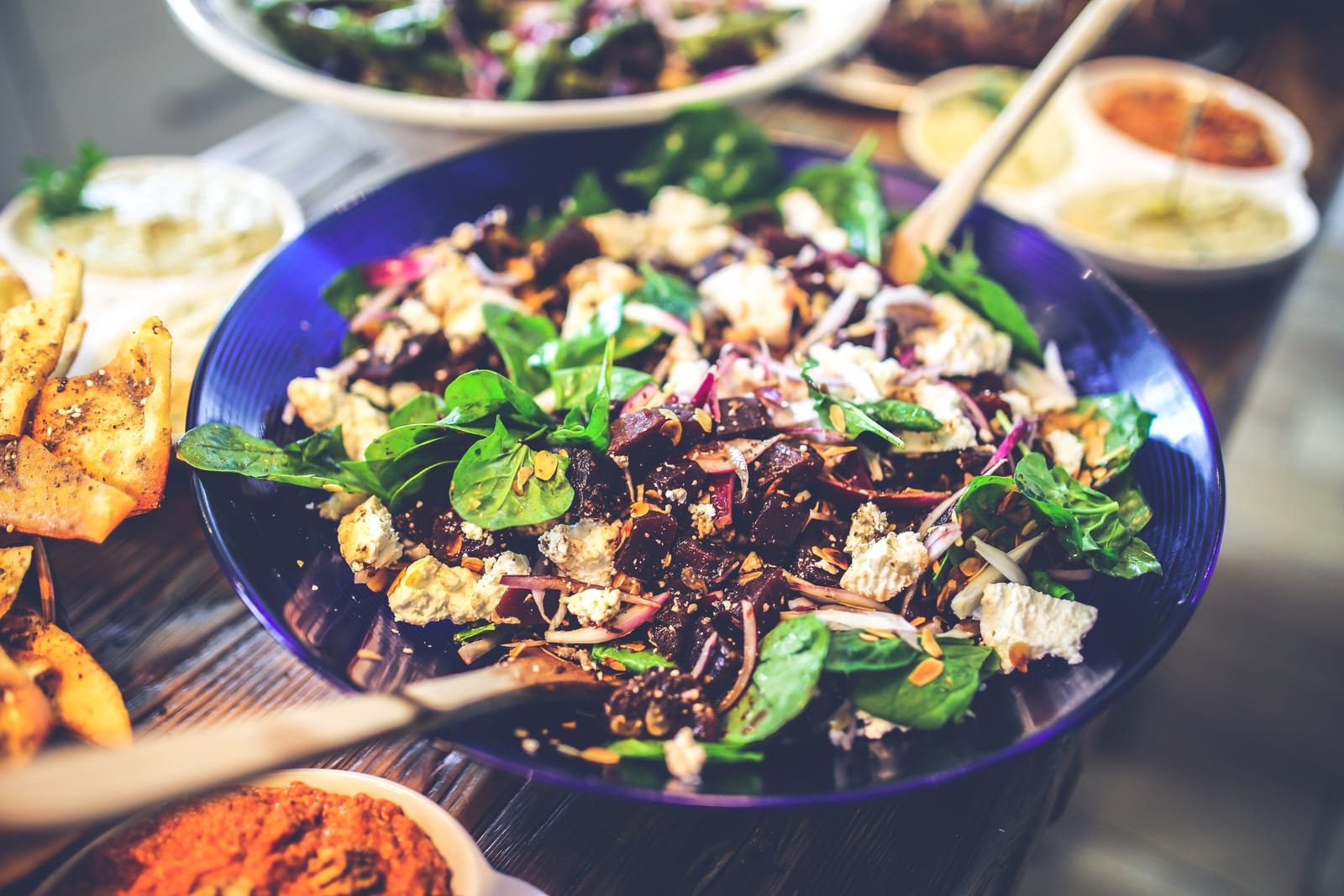
| Arugula, spinach, Swiss chard, kale | Among the most nitrate-dense vegetables (arugula has the highest concentration of any commonly eaten vegetable) working through the same nitrate-to-nitric-oxide pathway as beetroot |
| Strawberries and blueberries | Rich in anthocyanins, antioxidant compounds linked to measurable blood pressure reduction in people with hypertension in multiple studies |
| Garlic | Contains allicin, which has a modest but real vasodilating effect. One of the reasons it shows up repeatedly in blood pressure research |
Potassium-rich foods and why they matter
Potassium works differently than nitrates, it helps the kidneys excrete excess sodium and eases tension in blood vessel walls. The most potassium-dense whole foods include beans and lentils, tomatoes, mushrooms, avocado, bananas, and potatoes (with the skin). This is also a large part of why the DASH diet works as well as it does, it's built around potassium-rich produce and legumes by design.
How much sodium actually matters
Sodium reduction has its own well-documented effect, separate from what you add to your plate. Federal dietary guidelines cap daily sodium at 2,300 mg (about one teaspoon of salt) while the American Heart Association recommends most adults move toward an ideal limit of 1,500 mg, especially those with high blood pressure. The average American takes in about 3,400 mg a day, so there's usually room to cut.
To put the numbers in context: for every 2,300 mg reduction in daily sodium, systolic blood pressure fell by an average of about 5.6 mmHg (and diastolic by 2.3 mmHg) in research cited by the American Heart Association. Even a 1,000 mg cut helps. That's on top of, not instead of, the DASH diet's own effect, which is why the two are almost always studied and recommended together.
Fatty fish and omega-3s
Fatty fish (salmon, mackerel, sardines, and similar species) are one of the few animal proteins with direct blood pressure evidence behind them. A 2022 dose-response analysis published in the Journal of the American Heart Association pooled 71 trials and found the sweet spot was 2 to 3 grams of combined EPA and DHA per day, with people who already had hypertension seeing roughly 4.5 mmHg lower systolic pressure at the higher end of that range. Two servings of fatty fish a week is a realistic way most people can get close without supplementing.
For how the DASH pattern fits alongside a supplement, rather than replacing one, our guide on supplements vs. medication covers where each realistically fits.
What a realistic week of eating this way looks like
None of this requires eating perfectly. A few consistent swaps go further than one dramatic overhaul:
- Leafy greens or a beet-based side at least a few times a week, not as a one-time experiment
- Beans or lentils replacing red meat in two or three meals a week
- Fatty fish (salmon, sardines, mackerel) twice a week
- Checking sodium on packaged and restaurant food specifically, it's usually the biggest source, not the salt shaker at home
- Fresh or frozen berries as a regular snack, not an occasional treat
Looking for Additional Cardiovascular Support?
See our independent review of a multi-botanical formula designed to work alongside diet and lifestyle changes
Read Our Independent ReviewFrequently asked questions
What foods lower blood pressure the fastest?
Beetroot juice has the strongest evidence for a fast effect. Pooled trial data in people with high blood pressure shows about a 5 mmHg drop in systolic pressure in the hours after drinking it, driven by its nitrate content. Nitrate-rich leafy greens like arugula, spinach, and Swiss chard work through the same mechanism, though the effect is smaller than concentrated beet juice.
How much does the DASH diet actually lower blood pressure?
In people with high blood pressure, the DASH diet has been shown to lower systolic blood pressure by around 11 mmHg on average, without any weight loss required. Results can appear in as little as two weeks, and the effect is larger when sodium is also reduced.
How much sodium should I eat if I have high blood pressure?
Federal dietary guidelines cap sodium at 2,300 mg per day, roughly one teaspoon of salt, while the American Heart Association recommends most adults with high blood pressure aim for closer to 1,500 mg. Research shows blood pressure drops with any reduction in sodium, with no floor where the benefit stops.
Which foods are highest in potassium for blood pressure?
Beans, lentils, tomatoes, mushrooms, avocado, and bananas are among the most potassium-dense whole foods. Potassium helps the body excrete excess sodium and ease tension in blood vessel walls, which is why the DASH diet emphasizes these foods heavily.
Does eating fish help lower blood pressure?
Yes. Fatty fish like salmon, mackerel, and sardines are rich in omega-3 fatty acids. A 2022 dose-response analysis published by the American Heart Association found 2 to 3 grams of omega-3s daily was the sweet spot, with people who already had hypertension seeing roughly 4.5 mmHg lower systolic pressure at the higher end. Two servings of fatty fish a week is a realistic way to get there for most people.
Can I lower my blood pressure with food alone, without medication?
For some people with borderline or stage 1 readings, diet changes alone can bring numbers back into a healthier range, especially combined with sodium reduction, weight management, and exercise. For others, especially with more significant hypertension, diet lowers the numbers but doesn't fully replace medication. This is a conversation to have with your doctor, not a decision to make alone.